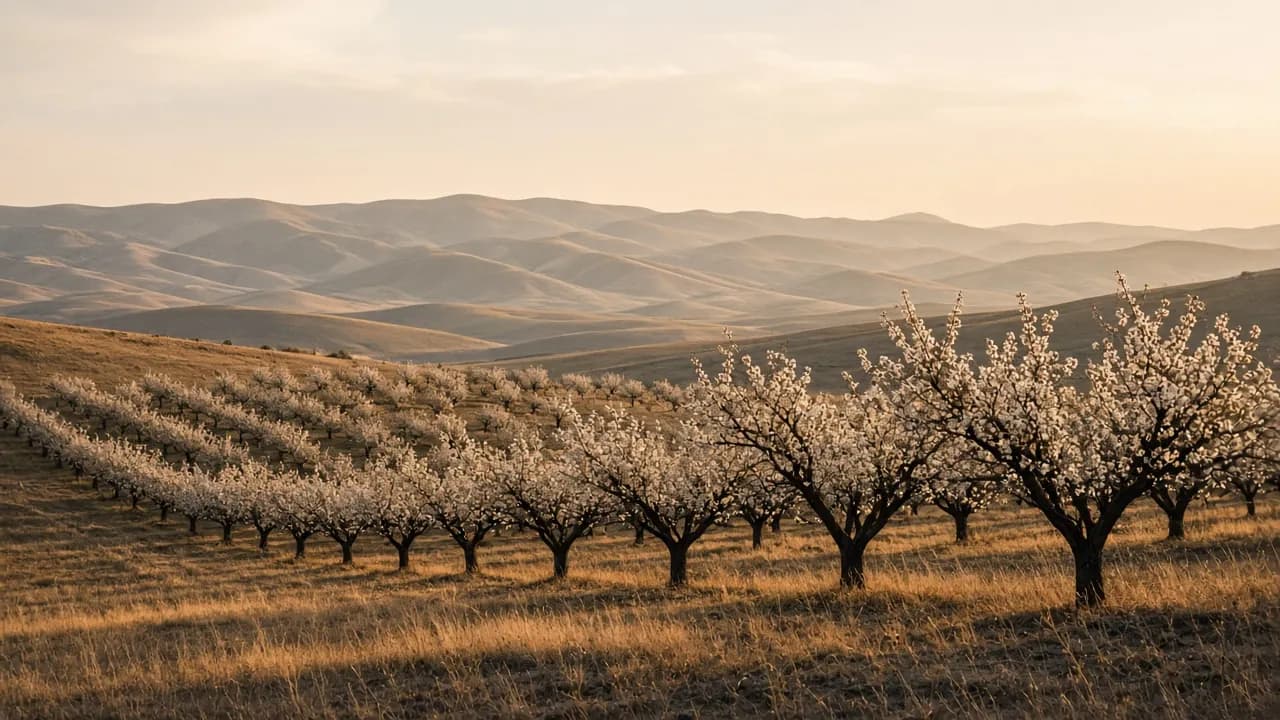
The almond tree
The story begins on a tree. The branches blossom and the almond ripens inside its shell. At harvest, the kernel becomes the plainest and most carefully chosen ingredient of the candy.
The roots, the city and the table of almond candy.
The story begins on a tree. The branches blossom and the almond ripens inside its shell. At harvest, the kernel becomes the plainest and most carefully chosen ingredient of the candy.
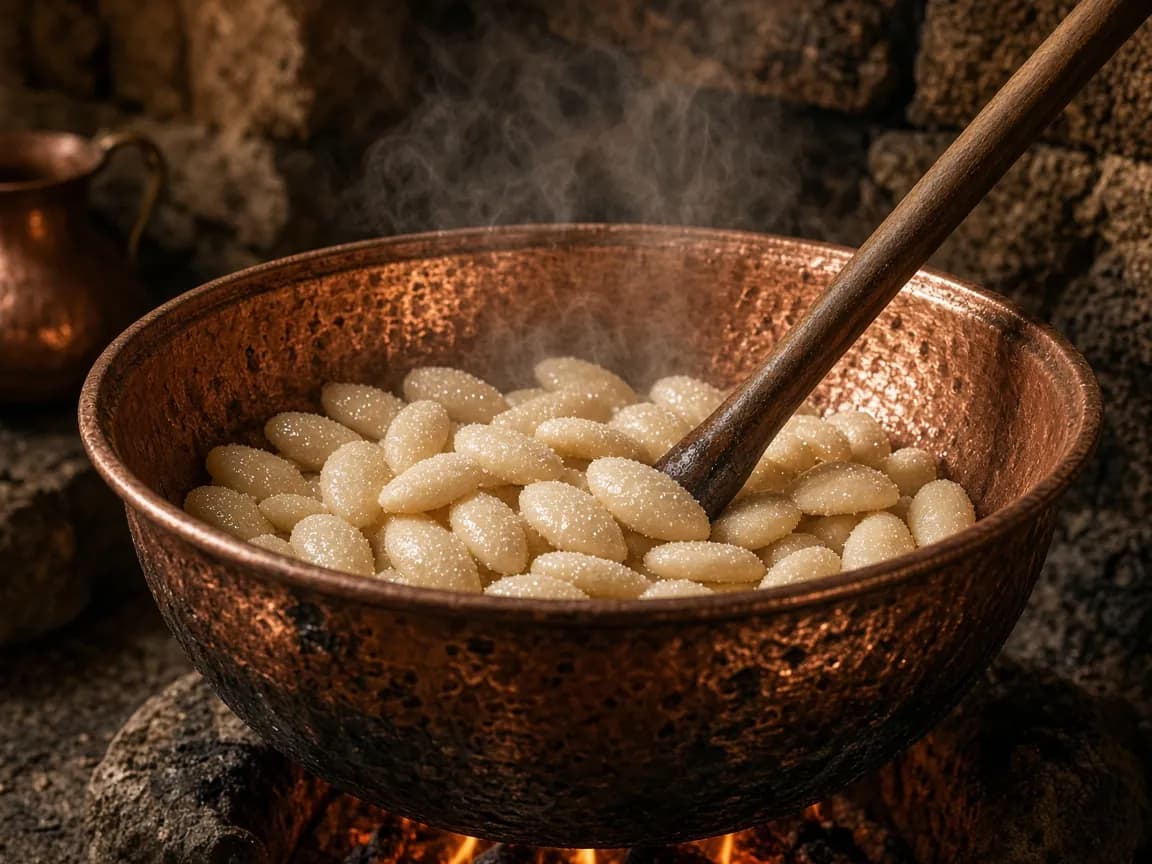
In the workshop, almonds turn in a rotating pan while syrup builds the coating layer by layer. The maker monitors its texture. This is a general account; recipes and times vary by production method.
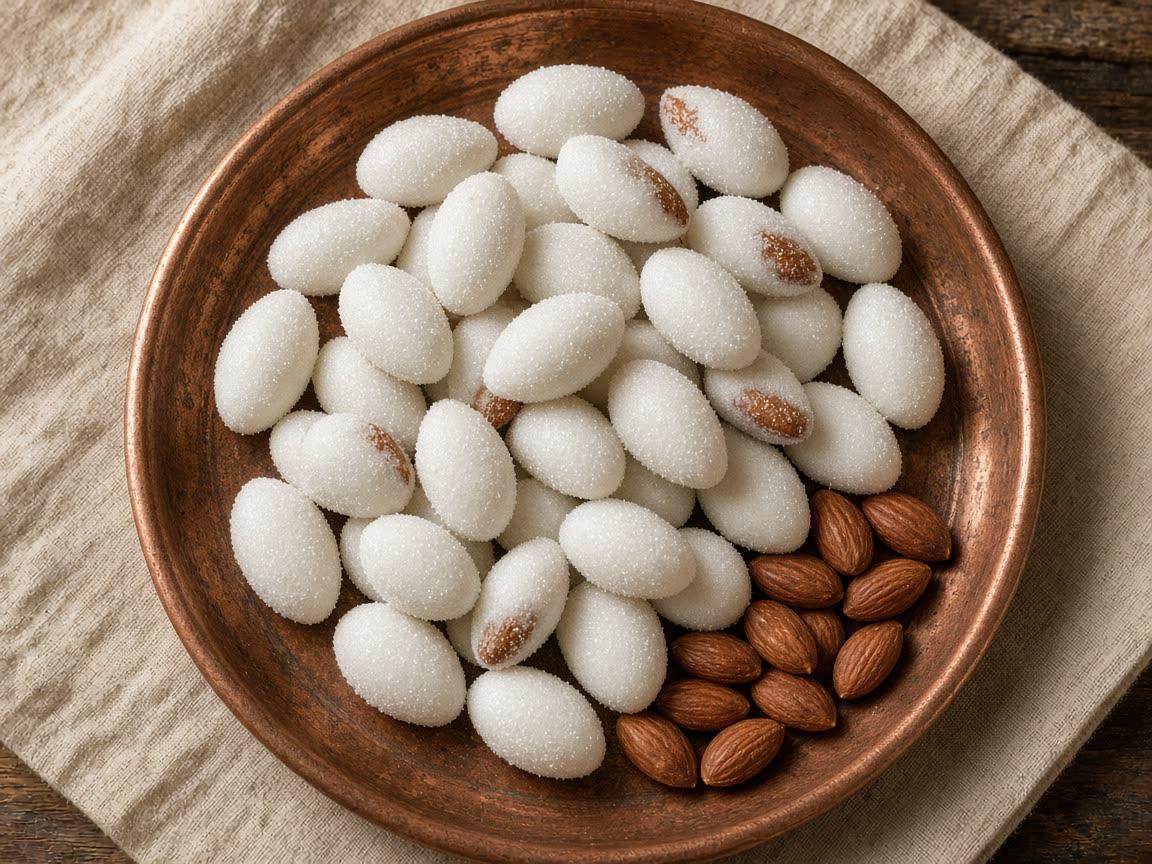
Almond candy is a whole almond coated in sugar. A thin shell outside, the almond's own flavor within. It looks simple; the craft lives in how fine the coating is.
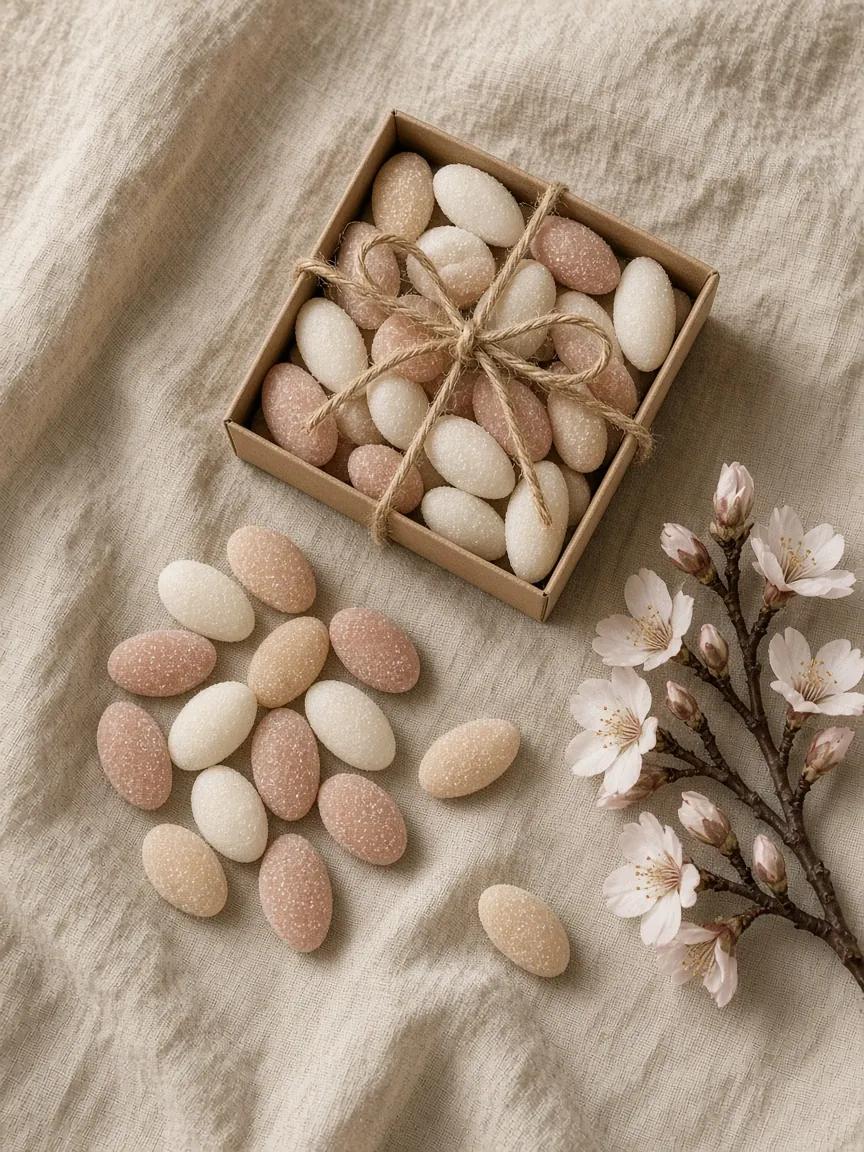
Almond candy is more than a sweet; it is a way of offering hospitality. It is set before a guest, shared at celebrations, and packed into a box to travel.
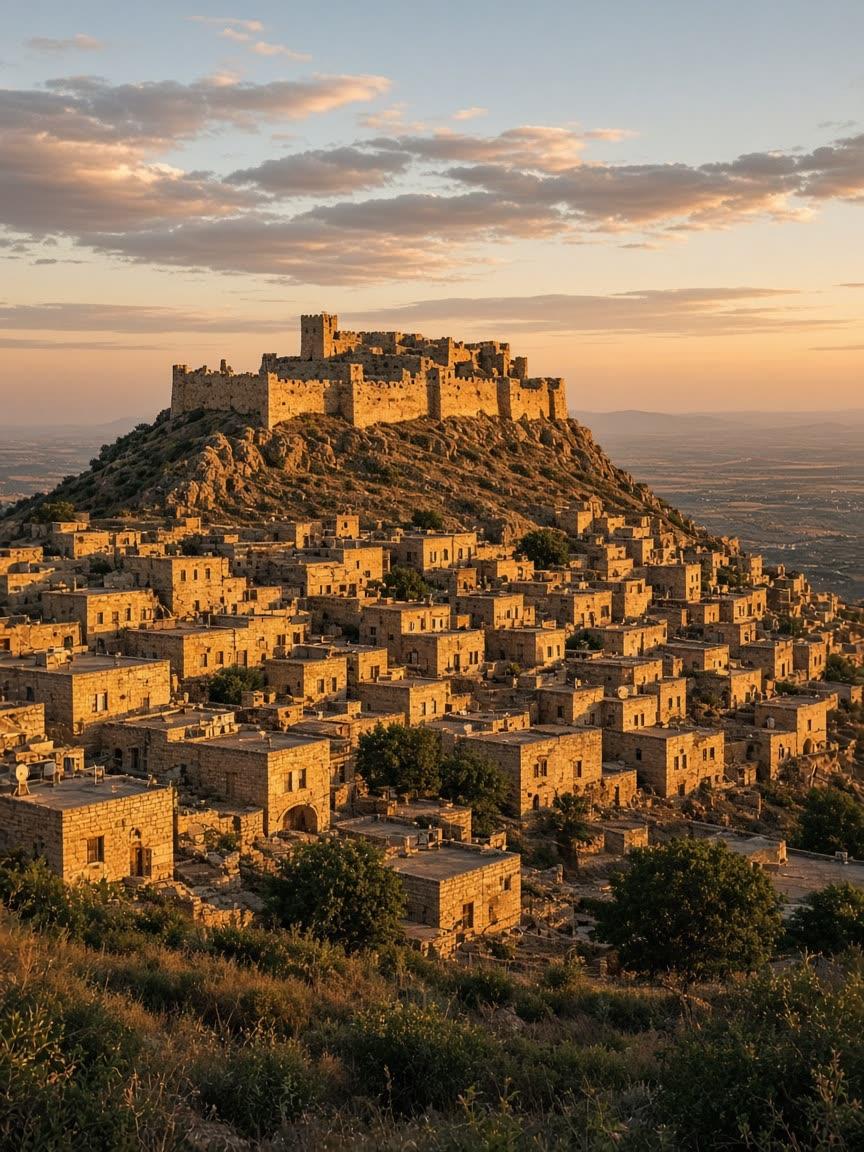
The candy carries the name of this city. Harput's stone walls, kilim patterns, copperwork and almond trees are parts of the same memory. A handful of candy carries the taste of it.
What is almond candy, how is it made, where does it sit in the culture, and what is known about it from a health point of view? Every card links to its source, so you can read the original.
The GakCoding brief highlights Elazığ’s sour-cherry almond candy, bringing a fruity, tart interpretation to the confection. Product presentations here were designed for the project, not to represent a real company’s recipe or product.
SourceGakCoding konu belgesi — Badem Şekeri, s. 1The subject brief notes news reports of new almond-candy varieties, including lemon, being explored in Elazığ. This illustrates innovation, not a claim to a particular business’s patent, exclusive production rights or a uniform recipe.
SourceGakCoding konu belgesi — Badem Şekeri, s. 1Badem şekeri is a traditional confection made by coating dried almonds in sugar. It is common in Turkish culture and is the main ingredient of the "bride's candy" handed out at weddings.
SourceVikipedi — Badem şekeriSmall confections with a hard outer shell are called "dragées" in French. Sugar-coated almonds belong to this family: "Jordan almonds" in English, Easter almonds (amêndoas de Páscoa) in Portugal, and "confetti di Sulmona" in Italy. So sugared almonds are not unique to a single city or country.
SourceVikipedi (İngilizce) — DragéeIn the Mardin region a blue type of badem şekeri called İmlebbes is made, coloured with a dye from the plant Isatis tinctoria. Mardin İmlebbes was registered by the Turkish Patent and Trademark Office on 23 Dec 2009 and holds a geographical indication. It shows that badem şekeri is a tradition kept alive in more than one region of Türkiye.
SourceVikipedi — Badem şekeri (İmlebbes bölümü)Gacker · Getting to know the product
Three questions about coating, ingredients and labelling. These are not registration or authenticity tests; recipes vary between products.
Reports on production in Elazığ describe a thin, crisp sugar coating. Thickness and texture vary with the recipe; appearance alone does not certify origin or quality.
Check the label or producer’s information for the almond variety and source. Local or imported origin alone does not establish quality, and different products may use different almonds.
Sugar type, flavourings and other ingredients vary. Check the ingredient list and tree-nut allergens, including almond. Using beet sugar or another sugar does not imply a health benefit or registered status.
Explore fictional workshops and original stories inspired by Elazığ’s serving traditions.